What to Do When Someone Says You're Too Expensive
"That's more than I expected" is four different sentences wearing the same clothes, and only one of them is about your price. Discounting on the spot answers all four the same way, which is why it works so badly.
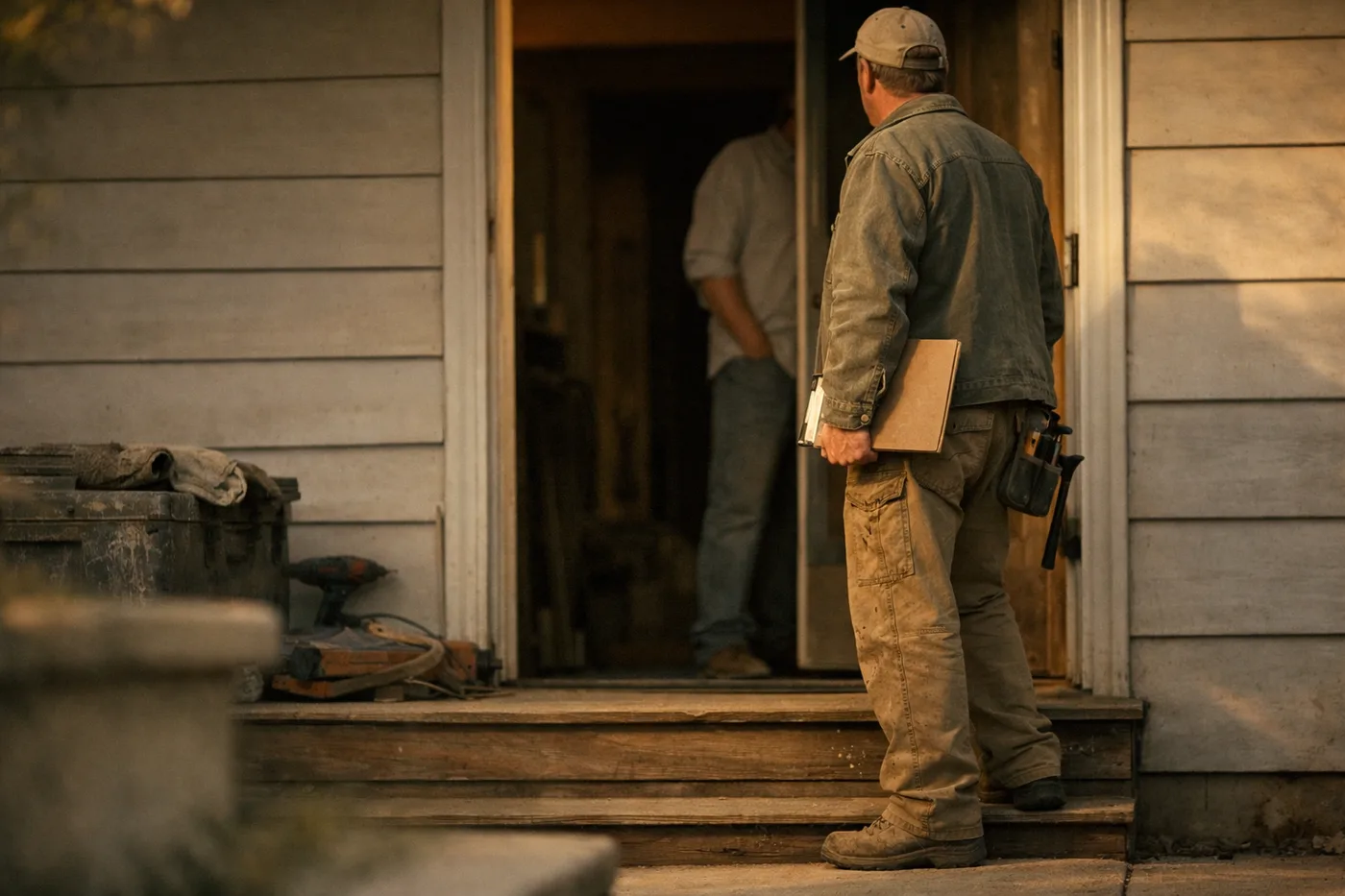
Somebody looks at your number and says it is more than they expected.
There is a strong pull, right then, to make the discomfort stop. You knock ten percent off, or you throw something in, and the moment passes. You have also just taught this customer — and yourself — that your price is an opening position.
Before you respond, work out which of four sentences you are actually hearing. They sound identical and they need opposite answers.
1. "I don't know what this should cost"
The most common by a distance, especially in residential work. They have no reference point. Their last quote was from a neighbor's teenager or from a company with six trucks, and neither is you.
This is not an objection. It is a request for context, and it is answered with information rather than a discount.
Explain what the price is made of — the time, what is included, what it takes to do properly. Not defensively, and not at length. One or two sentences that turn a number into a thing.
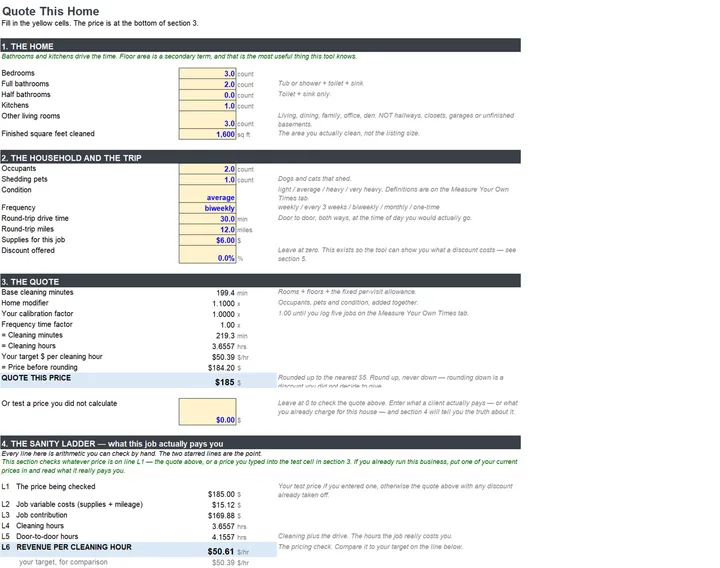
That's about three and a half hours with the drive, and includes the interior windows and the baseboards, which most quotes leave out.
A lot of "too expensive" evaporates at that point, because the number was never the problem — the absence of a reason was.
2. "I got a cheaper quote"
Sometimes true, sometimes a negotiating move, and usually not comparing the same thing.
Ask, plainly and without edge: what did theirs include? You are not challenging them; you are finding out whether the comparison is real. Frequently it is not — the other quote is a first-visit rate that goes up afterwards, or excludes something, or is a different frequency.
If it is genuinely the same work at a lower price, you have learned something useful about your market and you should say so honestly:
That's a good price. I can't match it and do the job the way I do it.
That sentence loses some jobs. It also keeps you out of a race you cannot win, because there is always somebody cheaper and they are usually about to go out of business.
3. "I want it, but not at that scope"
This is the productive one, and it hides inside the other three.
They cannot afford the full job. They can afford some of it. That is not a pricing objection — it is a scoping conversation, and it is where most saved deals actually live.
Change the scope, never the rate. Fortnightly instead of weekly. The main floor instead of the whole house. Drop a room. Move to a longer cycle.
This matters more than it looks. Cutting the price for the same work tells the customer your rate was inflated, and it stays cut forever. Cutting the work for a lower price keeps your rate intact and gives them a real choice. You can go back up in scope later; you can almost never go back up in rate.
4. "I'm not going to buy this"
Some people were never going to. They are price-shopping, or they wanted a number for a landlord, or they are hoping somebody will do it for a third of what it costs.
Let them go, promptly and pleasantly. The cost of chasing this one is not the discount — it is the hour you spend and the precedent you set. And a client won on a heavy discount is disproportionately likely to be the one who is difficult about everything else.
What not to do
Do not discount on the spot. If you drop 15% the instant somebody frowns, your price was never real, and they now know it. Every subsequent conversation with this client starts from that fact.
Do not over-explain. A page of justification signals that you think the price needs defending. Two sentences, then stop talking. The silence after a number is uncomfortable and it is not your job to fill it.
Do not apologize for it. "I know it's a lot, but..." concedes the point before they have made it.
Do not match a price you cannot deliver at. A job won below cost is worse than a job lost. You do the work, you carry the risk, and you pay for the privilege — and you find out eighteen months later when the equipment needs replacing.
The number that tells you whether it is you
Push-back on a quote feels personal, which makes it hard to judge in the moment. Over time it is measurable.
Track your quotes: date, who, amount, and outcome — won, lost, or still pending. After twenty you have a win rate, and a win rate is the only honest read on whether your price is out of step.
If you are winning nearly everything, you are cheap and the occasional objection is noise. Somewhere around half to two-thirds is where a healthy service business tends to sit. If you are winning almost nothing, that is a real signal worth acting on.
One caution: a quote nobody chased is not a lost quote. A large share of "losses" are people who got busy and never replied. Chase them once before you conclude anything about your price — the fix is often follow-up, not discounting.
The reframe worth keeping
Your price is not an opinion you are defending. It is what the work costs for your business to survive doing it.
That is not arrogance, and it is not something to argue about. It is arithmetic — your time, your overhead, the tax nobody withholds for you — and a customer disagreeing with it does not change any of the inputs.
A correct price you lose is better information than a wrong price you win.