What to Do When You Break Something at a Client's House
Everybody eventually breaks something. Whether it costs you a client has almost nothing to do with the object and almost everything to do with what you do in the next hour.
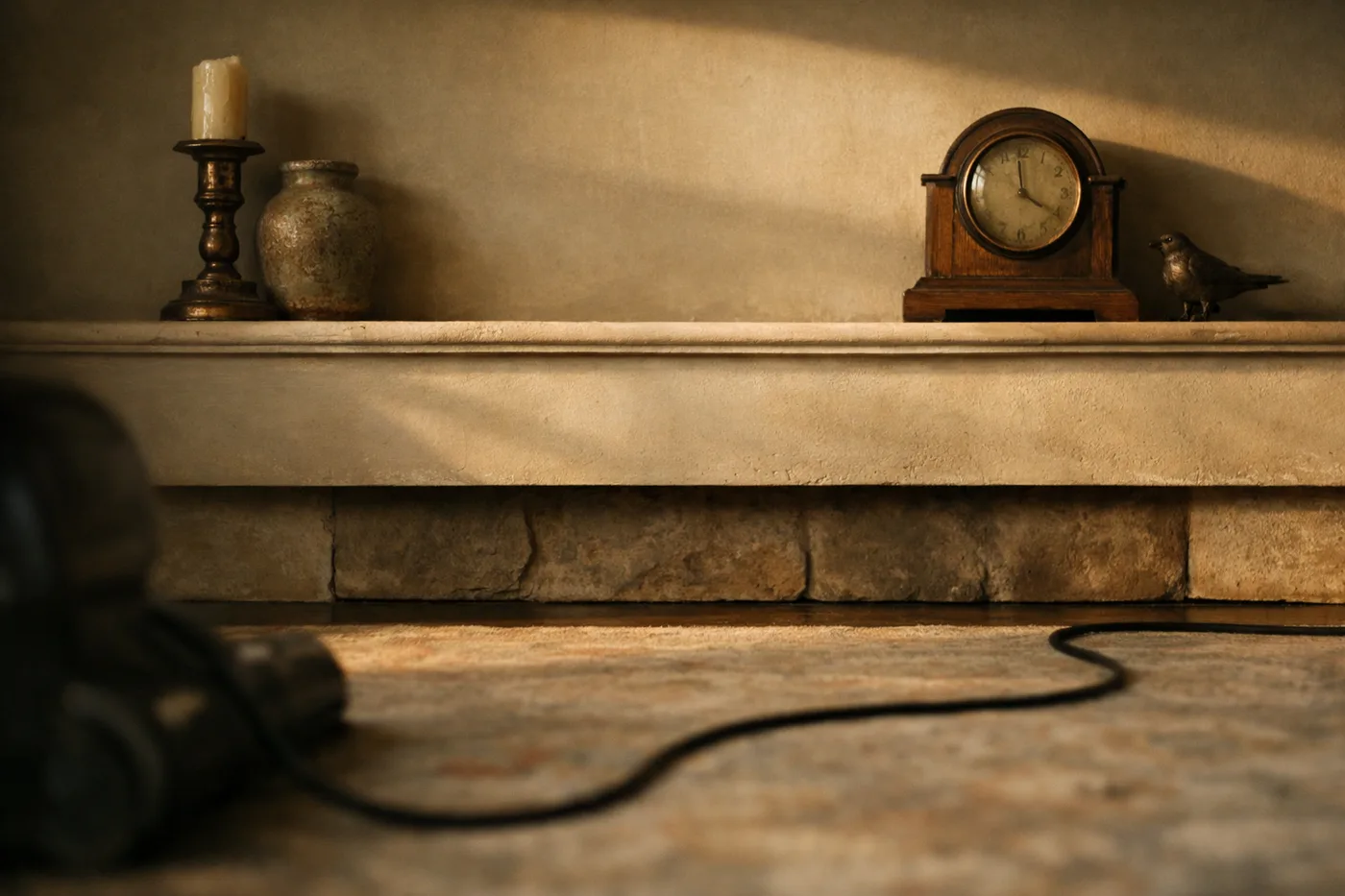
You catch the lamp with the vacuum cord. A shelf bracket lets go. The ceramic thing on the mantelpiece was closer to the edge than it looked.
If you work in other people's homes for any length of time, this happens. The question is not whether you will break something — it is what you do in the hour afterwards, and that hour decides everything.
The one thing that loses the client
Not telling them.
Every other mistake is recoverable. Being expensive, being slow, even breaking something genuinely valuable — those are all survivable. Hoping they will not notice is not.
Because they will notice. Not today, maybe not this week, but eventually — and at that moment you stop being somebody who had an accident and become somebody who was in their house alone and hid something from them. That is a different category of person entirely, and it is the version they tell their neighbors about.
The calculation people make in the moment is that the odds of being caught are low. The odds are much higher than they feel, and the cost of being caught is not proportional to the value of the object.
The first hour
Stop and look properly. Is anything unsafe — glass, water, something electrical? Deal with that first.
Photograph it. Where it was, what happened, the damage. Not to build a defense; so you have a factual record while it is fresh. Memory reshapes an incident within a day, including yours.
Tell them the same day. In person if they are home. By phone if they are not. Text only as a last resort — a text can read as evasive even when it is not, because it does not let them ask a question.
Do not diminish it. "It's only a little chip" is your judgment about their possession, and you do not have standing to make it. Describe what happened, plainly, without editorial.
I caught the lamp on the side table with the vacuum cord and it came down. The shade is bent and there's a chip on the base. I've taken a photo. I'm sorry — what would you like me to do about it?
Note the last question. You are not announcing a resolution; you are asking. That single move keeps them a participant rather than a recipient, and it is what stops most of these becoming disputes.
Pay for it, or claim it?
Depends on the number, and the threshold is lower than people expect.
Under a few hundred dollars: pay it. Out of pocket, quickly, with no argument. Yes, it comes straight off the job's profit and possibly a couple more. It also ends the matter, keeps a client who is now telling people you handled it well, and avoids a claim on your record.
Genuinely expensive: claim it. This is what general liability is for. Call your insurer before you agree to anything specific, because they will have a process and agreeing to a settlement first can complicate it.
Be aware of a trap here: standard general liability often excludes damage to property in your care, custody and control — which, in cleaning, is most of what you touch. A carpet you damage while cleaning it may fall outside your base policy even though a lamp knocked off a table is covered. Ask your agent that specific question before you ever need the answer.
Antiques, art, irreplaceable things: be honest immediately that this may be beyond a simple replacement, and involve your insurer early.
Do not settle a number in the doorway
The pressure to resolve it on the spot is intense and you should resist it.
I want to make this right. Can you find out what it costs to replace, and I'll take care of it?
That is a full commitment without agreeing to a number you may not be able to check. It also moves the valuation to them, which most people handle more reasonably than you fear — a client asked to price their own lamp usually comes back with a lower figure than the one you were dreading.
If somebody names a number that seems far out of line, you are allowed to ask for a receipt or a comparable listing. Ask calmly and once.
Then write it down
Record what happened, when, what it cost, and how it was resolved. Attach it to the client.
Two reasons, and the second is the one people miss.
The obvious one: if it comes up again in six months, you have the facts rather than a recollection.
The one that matters: two incidents at the same address is information. Three incidents across your whole book in a month is different information — that is about you, or your equipment, or how tired you have been.
Damage is a signal, and it is one of the few in a service business that is genuinely easy to miss, because each instance feels like isolated bad luck. Written down in one place, a pattern shows up in a way it never does from memory.
What actually prevents most of it
Almost all of it is a small number of causes, repeated.
The vacuum cord. By a distance the most common. It catches table legs, lamp bases, and anything on a low shelf. Watch where the cord is, not just where the machine is.
Surfaces you did not clear. Moving something to clean under it is when it gets dropped. Clear deliberately, one item at a time, or clean around it.
Wet floors and your own feet. Slips break two things — the object and sometimes you.
Rushing the last job. A disproportionate share happens in the final thirty minutes of a long day. That is not carelessness; it is fatigue, and the fix is scheduling rather than concentration.
The uncomfortable reframe
An accident handled well is not neutral. It is frequently better for the relationship than nothing happening at all.
The client learns something they otherwise could not: that when something goes wrong in their house while they are out, you tell them. There is no other way to demonstrate that, and it is the thing they were quietly wondering about when they gave a stranger a key.