What It Actually Costs to Start a Cleaning Business
The equipment is the cheap part and everybody focuses on it. The costs that sink first-year cleaning businesses are the two nobody puts in the spreadsheet.
Search this question and you will get numbers between two hundred dollars and forty thousand, which tells you the question is being answered badly.
The spread is real, but it is not mysterious. It comes from people quietly answering different questions: what does it cost to clean your first house this weekend, versus what does it cost to run a crew servicing office buildings. Those are different businesses that happen to share a word.
Here is the honest version, split by what you are actually starting.
Day one, residential, working alone
You can genuinely start for a few hundred dollars, and pretending otherwise puts people off for no reason.
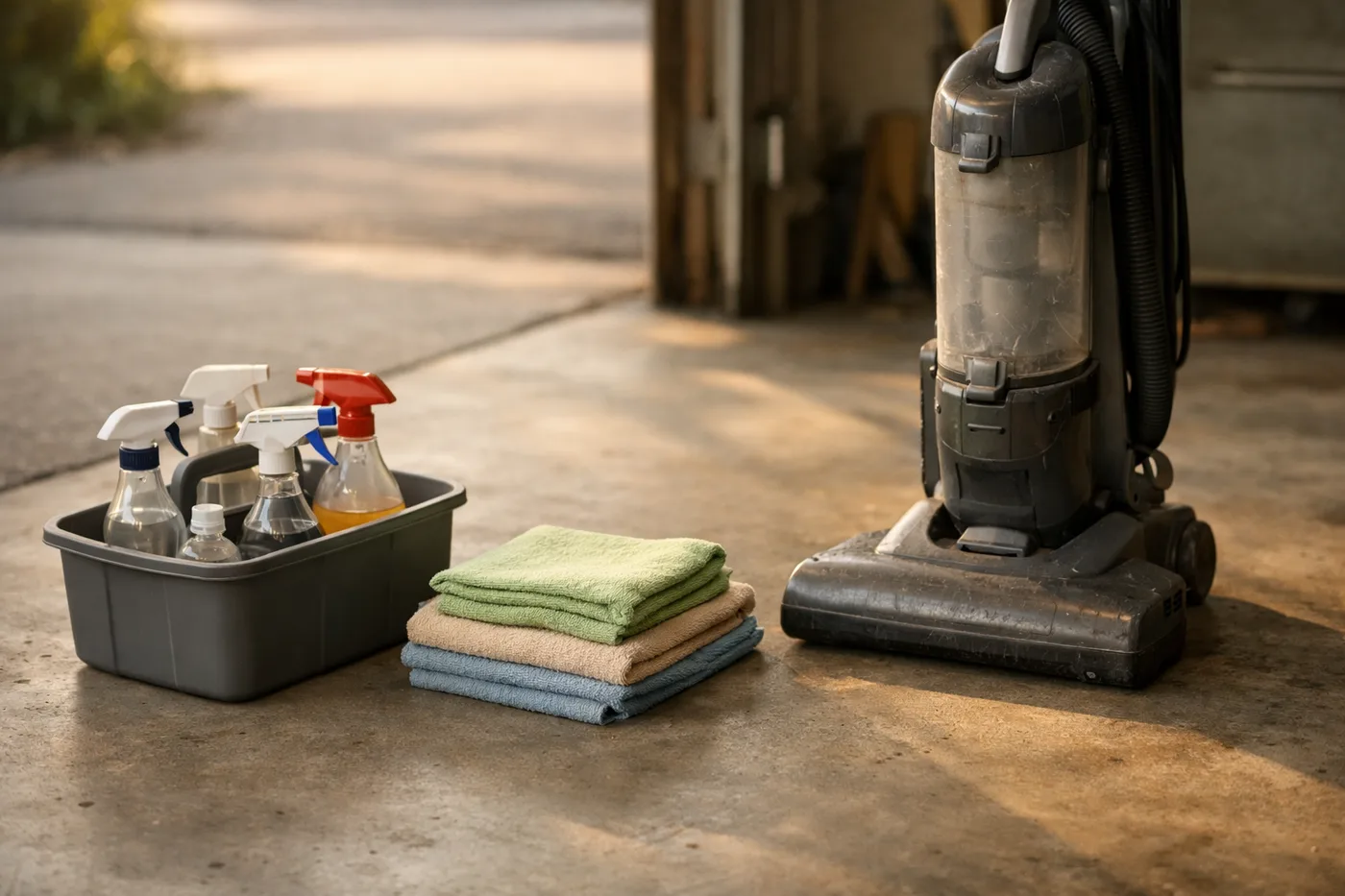
- Supplies and chemicals. A working kit, not a warehouse. Under $200 to start.
- A vacuum that does not fight you. This is the one place not to economize on day one. A bad vacuum costs you time on every single job, forever.
- Cloths, mops, caddy, gloves. Modest, but buy enough that you are not washing between houses.
- Insurance. General liability. This is not optional and it is not expensive. You are working unsupervised in other people's homes.
- Business registration. Varies enormously by state and municipality. Check yours rather than trusting a number from the internet.
That is a real start. If somebody tells you that you need a van and a floor machine to clean your first house, they are selling something.
Commercial is a different animal
Commercial contracts change the arithmetic, because buildings need equipment homes do not.
- Commercial vacuums, often backpack units for open floor space
- Floor equipment — auto-scrubber or buffer, depending on what you have taken on
- Transport capable of carrying it
- Higher insurance limits, often specified in the contract itself
- Bonding, frequently required for after-hours building access
This is where the four- and five-figure numbers come from, and much of it can be rented or bought used for the first contract. The mistake is buying a full commercial kit before you have a contract that needs it.
Let the first contract specify the equipment. Bid the building, win the building, then buy what that building requires. Equipment bought speculatively is a bet on a contract you have not won yet, and it depreciates while it waits.
The two costs nobody budgets for
Here is where first-year cleaning businesses actually get into trouble, and neither line appears in most startup checklists.
The gap before the first payment
You will work before you are paid. On residential that might be a couple of weeks. On commercial it is routinely thirty to forty-five days after the first month of service — which means you could be sixty to seventy-five days from your first shift before money arrives.
Meanwhile you are buying supplies, paying for fuel, and possibly paying someone. If you took the contract with $400 in the bank, the contract itself is the thing that breaks you.
Budget the gap deliberately. Ask about payment terms during the bid conversation, not after. And if you are hiring for a contract, understand that payroll runs on a fortnightly cycle while your invoice runs on a monthly one, and those two cycles are not friends.
Your own time, before it pays
The first weeks are walkthroughs, quotes, phone calls, and driving to buildings that go quiet. That is real work producing no revenue, and if you have priced your services as though every working hour is billable, you have priced them wrong.
Overhead has to be recovered across the hours you can actually sell, not the hours you work. New operators routinely spread twelve months of costs across an imaginary full schedule, under-recover all year, and cannot work out where the money went.
The costs that keep coming
Startup gets the attention. Recurring costs decide whether the business survives.
- Supplies, ongoing
- Fuel — larger than people expect on a scattered route
- Insurance, monthly or annually
- Equipment replacement, which is not optional but is easy to pretend is
- Phone, licensing, accounting
- Your own tax set-aside, which nobody withholds for you
Total twelve months of all of it, then divide by the billable hours you can realistically sell in a year. That figure is what every hour you quote has to carry before you have earned anything at all.
If you skip this step, you will discover the number eventually — when something breaks and there is nothing set aside to replace it.
What actually gates the business
The equipment is the cheap part, and it is where all the attention goes because it is the part you can buy.
What gates a cleaning business in year one is not gear. It is not knowing how long a building takes, and therefore bidding it wrong; and it is running out of cash in the gap between doing the work and being paid for it.
Both are solvable with information rather than money. Time your first few jobs properly so you stop guessing. Ask about payment terms before you sign. Keep enough cash to survive the gap you have measured rather than the gap you assumed.
That is a less exciting answer than a shopping list. It is the one that decides who is still cleaning in eighteen months.